.png)

Daily Scope / Jul 11, 2026
Market Dynamics: The Ripple Effect of JPMorgan's Private Blockchain Concerns
As private blockchains gain traction, market players must navigate shifting valuations and liquidity concerns, with Ripple's RLUSD facing significant changes amidst evolving trends.
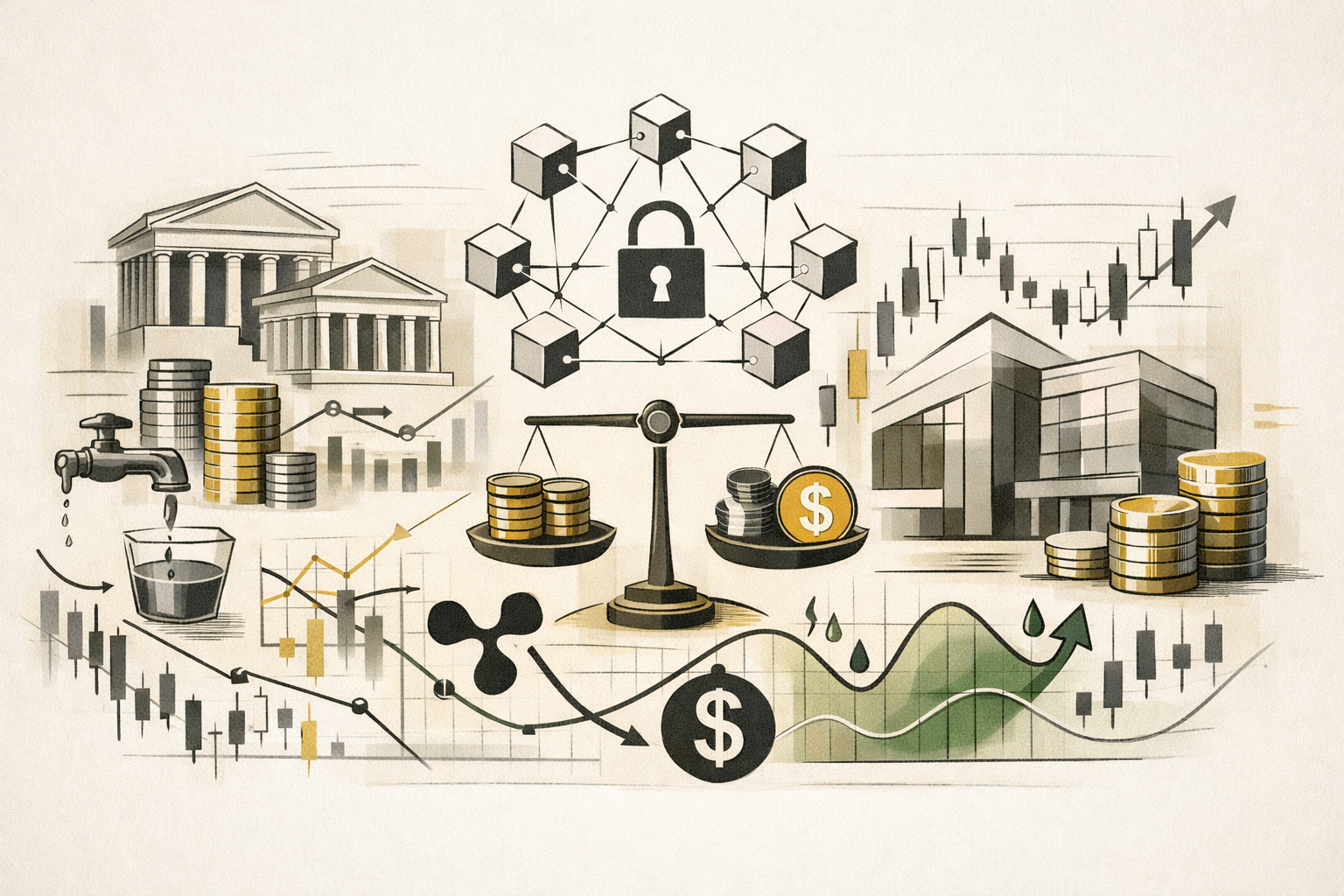
The JPMorgan Warning: A New Challenge for Bitcoin
JPMorgan's recent analysis has raised alarms about the increasing shift toward private blockchains, which they argue could pose a more significant threat to Bitcoin than previously anticipated. This warning comes at a time when the crypto market is already grappling with volatility and changing investor sentiment. The bank's assessment suggests that tokenization and settlement processes moving to closed networks could lead to a reduction in market activity and liquidity, ultimately impacting Bitcoin's valuation as the de facto digital gold.
The implications of this shift are profound. If Wall Street continues to favor private blockchains, the liquidity that has historically supported Bitcoin could dwindle. This potential exodus of capital might not only diminish Bitcoin's market share but could also pave the way for alternative digital currencies to gain traction. As traditional finance and crypto increasingly intersect, the stakes for Bitcoin and its proponents are higher than ever.
Ripple's Struggles: RLUSD Supply Decline
In a notable development, Ripple has reduced the supply of its stablecoin RLUSD on the Ethereum blockchain from a peak of $1.24 billion to approximately $692 million. This decline reflects a broader trend of shifting preferences among investors and market participants. As the market continues to evolve, the relevance of certain stablecoins may be tested, leading to adjustments in supply as organizations respond to changing demand dynamics.
The implications of this reduction are twofold. On one hand, Ripple's decision could signify a strategic move to maintain stability amid a fluctuating market. On the other hand, it raises questions about the long-term viability of RLUSD as an attractive option for investors, especially when compared to the performance of native tokens like XRP, which have recently seen a significant uptick in transaction volume.
XRP's Resurgence Amidst Stablecoin Decline
Interestingly, as Ripple's RLUSD stablecoin supply decreases, XRP has experienced a remarkable 77% increase in transactions facilitated by AI agents. This stark contrast suggests a pivot in the market where participants may be favoring XRP over RLUSD, aligning with broader trends in crypto adoption and utilization. The rise in XRP transactions indicates a growing confidence in its utility, potentially positioning it as a more favorable asset in the current market landscape.
This shift could be interpreted as a vote of confidence in XRP's fundamentals, particularly as it continues to grapple with its performance against Bitcoin. Despite XRP's challenges in maintaining its value relative to Bitcoin, the recent surge in transactions may signal a resurgence of interest that could prove beneficial in the long term.
The Ripple-Bitcoin Dynamic: A Closer Look
Despite the recent uptick in XRP transactions, the token still faces challenges in its performance against Bitcoin, hovering at around 0.00001735 BTC. This prolonged slide against Bitcoin highlights the complexities of the cryptocurrency market, where investor sentiment can shift rapidly and dramatically. While XRP's transaction volume increases, its relative valuation against Bitcoin remains a critical point of contention, suggesting that investor confidence in XRP may not yet fully translate into price stability.
The ongoing struggle for XRP to maintain its value relative to Bitcoin underscores the broader competitive landscape within the crypto space. As market participants weigh the merits of various assets, the dynamics between established tokens like Bitcoin and emerging alternatives like XRP will continue to shape market behavior.
Circle's Federal Banking Charter: Implications for the Stablecoin Market
In a significant regulatory development, Circle has received final approval for its national trust bank charter, allowing it to operate under a unified federal framework. This move is poised to strengthen Circle's position in the stablecoin market, particularly as it transitions its $73.2 billion stablecoin to a more regulated environment. Enhanced regulatory clarity may foster greater trust among investors and users, potentially leading to increased adoption of Circle's offerings.
The approval of Circle's banking charter could have ripple effects across the stablecoin landscape. As regulatory scrutiny intensifies, other stablecoin issuers may feel pressured to align themselves with similar frameworks. This shift could lead to a more structured and transparent market, which may ultimately benefit consumers and investors by reducing risks associated with unregulated assets.
Navigating the Evolving Landscape
As the cryptocurrency market continues to evolve, participants must remain vigilant and adaptable to changing trends and regulations. The interplay between private blockchains and public cryptocurrencies represents a critical juncture that could redefine the competitive landscape. Investors and stakeholders will need to closely monitor developments, especially as traditional financial institutions increasingly engage with blockchain technology.
In this environment of uncertainty and opportunity, the ability to pivot and respond to new information will be paramount. Whether it's through embracing innovative technologies or navigating regulatory hurdles, market players must be prepared to navigate the complexities of the evolving crypto ecosystem.
Want More Unfiltered Insights?
View Latest Insights on X