.png)

Daily Scope / Jun 23, 2026
US Senate's CBDC Ban: A Significant Roadblock for Digital Dollar Aspirations
The Senate's recent decision to ban a Federal Reserve CBDC until 2030 raises questions about the future of digital currency in the US. This analysis delves into the implications for regulatory landscapes and market dynamics.
The Housing Bill: A Legislative Surprise
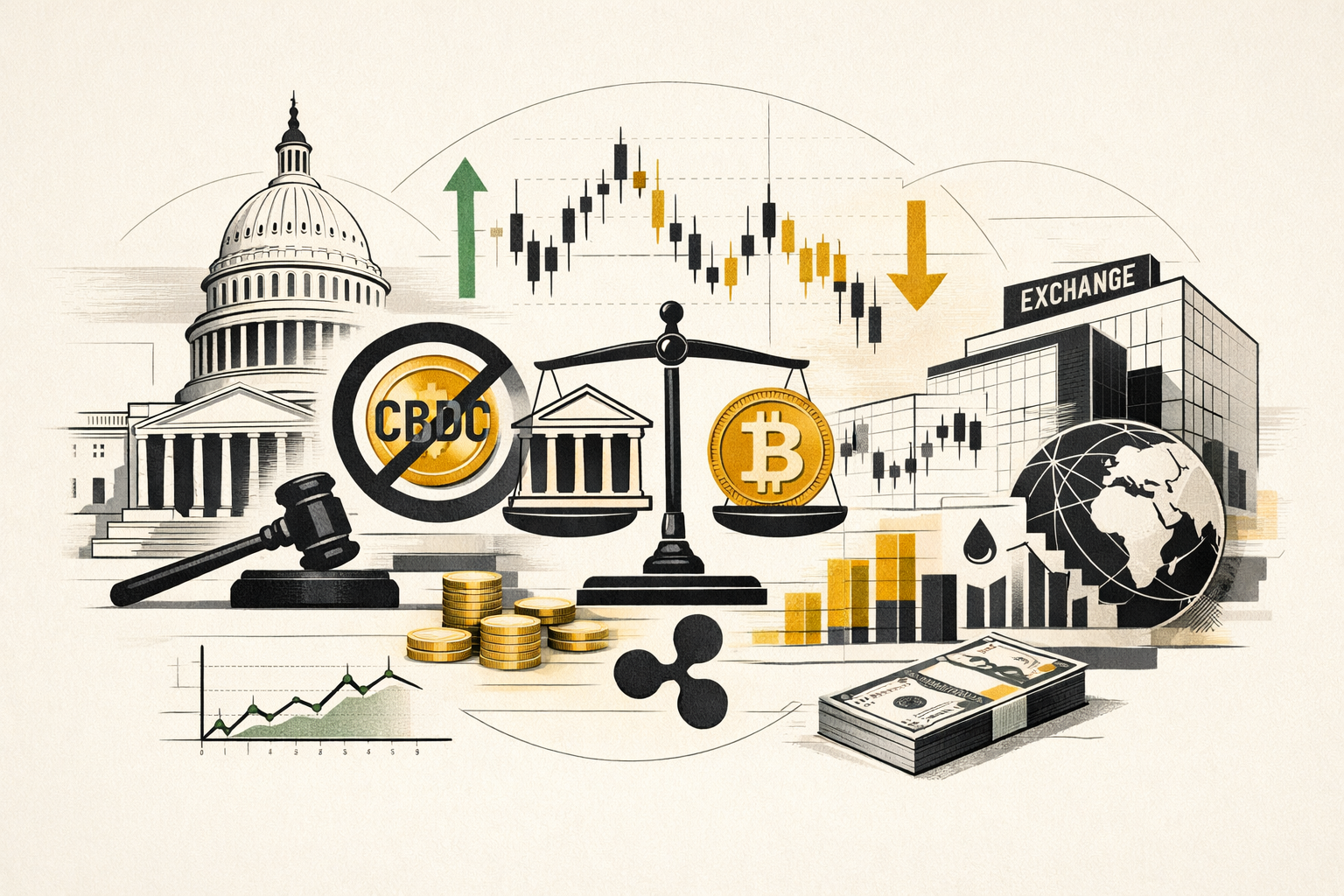
In an unexpected legislative turn, the US Senate passed a housing affordability bill that carries a ban on the Federal Reserve's central bank digital currency (CBDC) until 2030. With a decisive vote of 85-5, the bill has introduced a notable hurdle for any plans regarding the digital dollar. This ban signifies a legislative commitment to delay the exploration of a CBDC, a topic that has seen increasing interest and debate among policymakers and the public alike.
While the Federal Reserve has primarily treated the concept of a CBDC as a research initiative, the Senate's action formalizes a blockage that could impact the US's position in the global digital currency landscape. As other nations move towards launching their own digital currencies, the US's hesitation may have broader implications for its financial system and global competitiveness.
Implications for the Federal Reserve
The ban on a CBDC until 2030 raises critical questions about the Federal Reserve's ability to innovate within the digital currency space. Without the ability to pursue a CBDC, the Fed may be constrained in its efforts to modernize the financial system, particularly as cryptocurrencies continue to gain traction among consumers and investors. This delay could hinder the Fed's ability to respond to the evolving financial landscape and the demands of a digital economy.
Furthermore, the prohibition comes at a time when central banks worldwide are actively exploring digital currencies to enhance payment systems and financial inclusion. The US's decision to put a hold on a CBDC may force the Fed to reassess its strategy in engaging with emerging technologies and digital finance, potentially leading to a loss of influence in global monetary policy discussions.
Market Reactions: A Mixed Bag
The announcement of the CBDC ban has elicited varied reactions from the cryptocurrency markets. On one hand, Bitcoin's price has seen a notable rise, surpassing $65,000, as ETF outflows have slowed and external geopolitical factors, such as a peace deal between the US and Iran, provide a supportive backdrop. On the other hand, the long-term implications of the CBDC ban introduce uncertainty, which could temper investor enthusiasm in the crypto space.
In the wake of this legislative decision, institutional interest in Ripple's XRP has surged, with reports indicating that the Bitwise XRP ETF has crossed $200 million in year-to-date inflows. This suggests that while some segments of the market may be buoyed by the ban, others could remain cautious as they navigate an increasingly complex regulatory environment.
Ripple's Regulatory Advances
Amidst the broader regulatory landscape, Ripple has secured preliminary approval as a Crypto Asset Service Provider (CASP) in Luxembourg. This development positions Ripple favorably as Europe intensifies its regulatory framework for cryptocurrencies. Such approvals are crucial for companies looking to establish a foothold in regional markets, especially as the EU moves towards clear guidelines for crypto operations.
This regulatory progress for Ripple may reflect a shift in focus for crypto companies seeking to thrive outside of US jurisdiction, particularly given the uncertain regulatory climate at home. As these companies navigate the complexities of international regulations, their ability to adapt and find new opportunities will be essential for sustained growth.
Looking Ahead: The Future of Digital Currency
The Senate's ban on a Federal Reserve CBDC until 2030 is a significant marker in the evolution of digital currency policy in the United States. As other nations proceed with their digital currency initiatives, the US risks falling behind in innovation and regulatory leadership. The challenge will be for the Federal Reserve to reassess its position and find a way to engage with digital currencies in a manner that aligns with its monetary policy objectives.
In the meantime, the market dynamics surrounding cryptocurrencies will continue to evolve. With rising institutional interest and increasing regulatory clarity in other regions, the US crypto landscape could see a bifurcation where domestic companies may seek opportunities abroad. Stakeholders in the crypto space will need to closely monitor developments in regulation and market sentiment as the narrative unfolds.
Want More Unfiltered Insights?
View Latest Insights on X