.png)

Daily Scope / Sep 15, 2026
Navigating a Jittery Market: Crypto Treasuries, Regulatory Breakthroughs, and the Future of Stablecoins
Amidst market fluctuations and regulatory shifts, treasury firms are stacking major cryptocurrencies while the landscape for stablecoins faces scrutiny and potential reform.
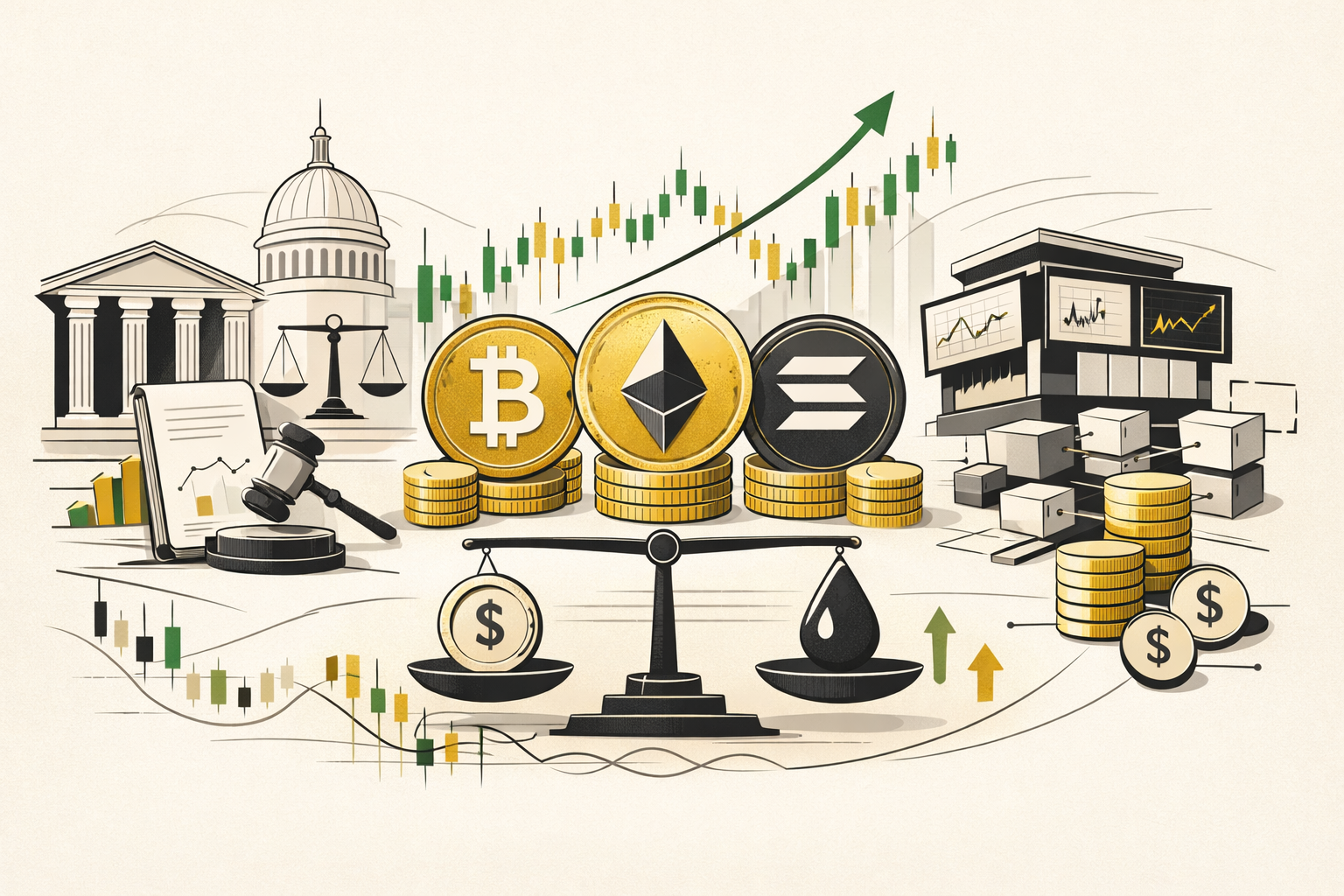
Treasury Firms Increase Holdings in a Volatile September
In a month marked by market instability, treasury firms are doubling down on their investments in Bitcoin, Ethereum, and Solana. Despite facing a softening market, these firms have continued to accumulate crypto assets, signaling a strong belief in the long-term value of these tokens. The increased buying activity comes as investors brace for potential shifts following a Federal Reserve rate decision, showcasing a mix of caution and conviction among institutional players.
This trend highlights a broader strategy among treasury firms to leverage the current market conditions. While Bitcoin and Ethereum have been the primary focus, the inclusion of Solana suggests a diversification strategy aimed at capturing potential growth in multiple sectors of the blockchain ecosystem. The resilience displayed by these firms raises questions about market sentiment and the long-term implications of such strategic moves.
Regulatory Developments: The Clarity Act Gains Traction
Recent advancements in regulatory frameworks have brought renewed optimism to the crypto market. The unveiling of a revised Clarity Act by Senate Republicans, backed by significant concessions from the White House, has spurred a recovery in the prices of key cryptocurrencies like Bitcoin, XRP, and Ethereum. This potential regulatory clarity could pave the way for a more robust and transparent framework for digital assets, fostering an environment conducive to growth and innovation.
However, the journey toward comprehensive regulation is fraught with challenges. The ongoing debate between banks and crypto advocates regarding stablecoin rewards underscores the tensions within the financial ecosystem. As regulatory bodies seek to balance innovation with consumer protection, the outcome of these discussions will significantly impact the future landscape of digital currencies.
The Stablecoin Dilemma: Insights from Industry Leaders
The stablecoin sector is undergoing intense scrutiny, as highlighted by recent admissions from Ripple's CTO Emeritus, David Schwartz. His reflections on early blockchain missteps emphasize the inherent challenges facing stablecoin payments in 2026. This candid acknowledgment of past errors raises critical questions about the viability and reliability of stablecoins as a payment mechanism in an evolving digital economy.
As the market capitalization of stablecoins continues to surge, the discussion around their utility and regulatory compliance becomes increasingly urgent. The push for tighter regulations by banking groups further complicates the landscape, indicating a possible shift towards more stringent controls that could redefine how stablecoins operate within the broader financial system.
The Energy-Driven Future of AI Infrastructure
In parallel to the crypto market's evolution, the AI infrastructure sector is also undergoing significant transformations. Companies like Clichmont are prioritizing ownership of physical infrastructure over merely accessing GPU resources through rentals. This strategic pivot reflects a growing recognition that energy availability and data center capacity are becoming critical bottlenecks in AI compute capabilities.
Clichmont's approach emphasizes a long-term investment in infrastructure that can adapt to future technological demands, positioning itself as a key player in the AI landscape. By focusing on securing reliable power sources and optimizing cooling solutions, the company aims to create a sustainable model that supports the next generation of AI applications and services.
Balancing Capital Intensity and Market Demand
The capital-intensive nature of building physical infrastructure presents unique challenges, particularly in the context of fluctuating market demands. Companies that invest heavily in their own facilities must navigate the complexities of timing their expansions to align with actual demand. This delicate balance is critical, as miscalculations can lead to either underutilized resources or missed opportunities in a competitive market.
The debate between ownership versus rental models in the AI sector highlights the trade-offs involved in infrastructure investments. While owning facilities provides greater control over operations, it also entails significant risks related to capital allocation and demand forecasting. As the industry evolves, the most successful players will likely be those that can effectively manage these risks while remaining flexible to adapt to changing market conditions.
Looking Ahead: The Path Forward for Crypto and AI
As the crypto market continues to navigate regulatory uncertainties and market fluctuations, the strategies employed by treasury firms and infrastructure companies will play a pivotal role in shaping the future landscape. The interplay between regulatory clarity, stablecoin viability, and infrastructure investment will define the trajectory of both sectors in the coming years.
The ongoing dialogue around these issues underscores the importance of adaptability and foresight in an ever-evolving digital economy. Stakeholders across the spectrum must remain vigilant, leveraging insights from current trends to inform their strategies and ensure they are positioned for success in a rapidly changing environment.
Want More Unfiltered Insights?
View Latest Insights on X