.png)

Daily Scope / Aug 1, 2026
Market Movements and Regulatory Developments: A Week of Shifts in Crypto
As Bitcoin hits a two-week low, the landscape of cryptocurrency is marked by regulatory advancements and security concerns, shaping investor sentiment.
Bitcoin's Recent Decline
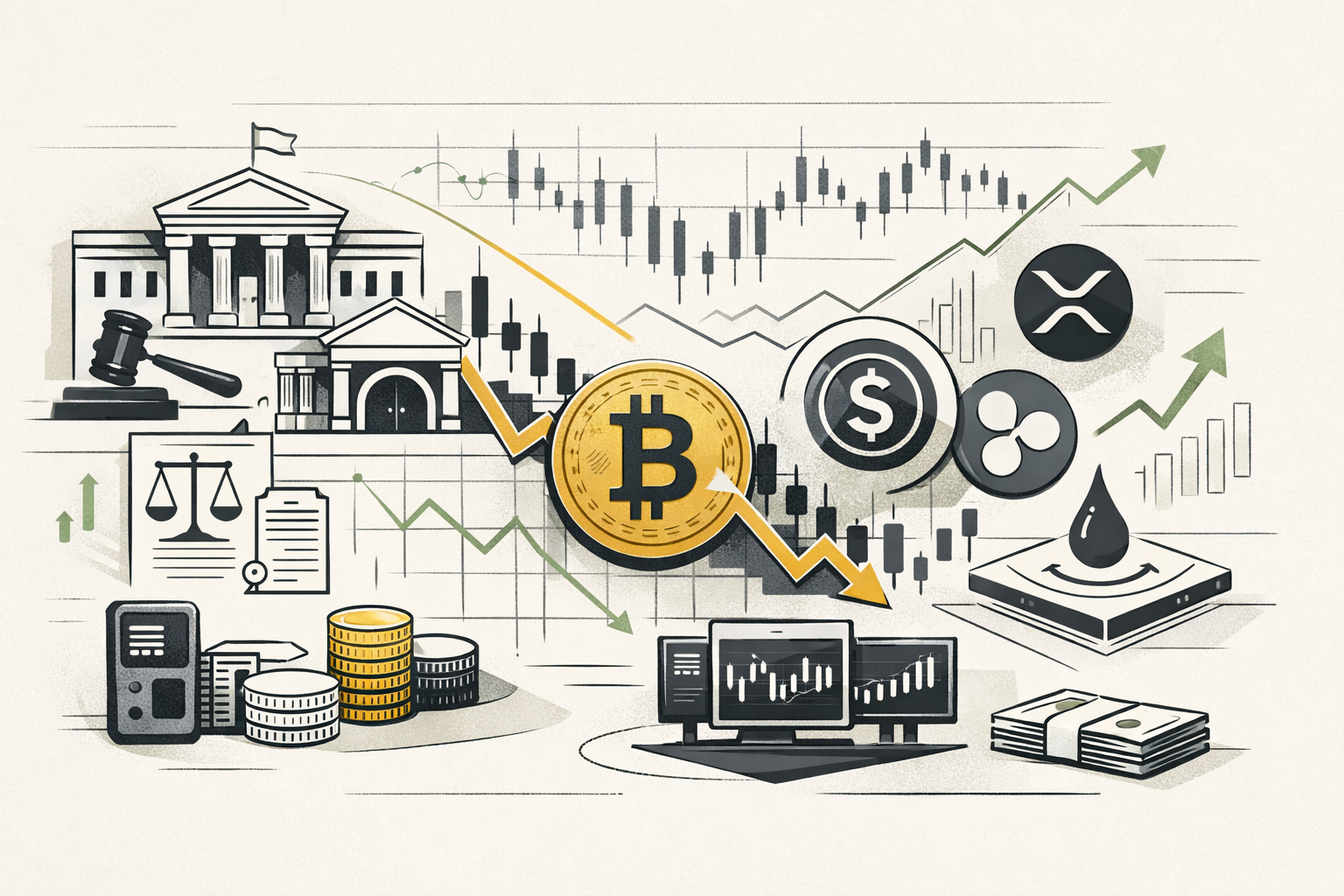
Bitcoin has recently experienced a decline to a two-week low, primarily influenced by the Federal Reserve and the Bank of Japan's decision to maintain current interest rates. This stagnation in monetary policy has left investors cautious, causing a ripple effect across the cryptocurrency market. The lack of decisive action from these central banks contributes to an atmosphere of uncertainty, which has historically led to a bearish sentiment in crypto trading.
As traders assess the implications of sustained interest rates, Bitcoin's price movement reflects broader market anxieties. The inability to break through significant resistance levels has further fueled skepticism, leading to increased volatility. With Bitcoin's trajectory appearing less favorable, market participants are closely monitoring external economic indicators that could sway investor confidence.
Stablecoin Developments: USDC and RLUSD
In a contrasting development, the stablecoin landscape is witnessing notable advancements, particularly with Circle's USDC securing a New York trust charter. This regulatory milestone aligns USDC with Ripple's compliance efforts, potentially enhancing its adoption among institutional investors. However, despite this positive news, Circle's stock has faced unexpected declines, suggesting that market perceptions may not fully align with regulatory achievements.
Meanwhile, Ripple's RLUSD is gaining traction as it integrates with major payment providers like Google and Mastercard. This collaboration is poised to accelerate the adoption of AI-driven payment solutions, positioning RLUSD as a competitive player in the stablecoin market. The combination of regulatory approval and strategic partnerships could redefine the utility of stablecoins in everyday transactions, signaling a shift in how cryptocurrencies are perceived by both consumers and businesses.
Security Concerns: The Coldcard Exploit
A significant security breach involving the Coldcard hardware wallet has raised alarms within the crypto community. The exploit, which has resulted in the theft of nearly 600 Bitcoin worth approximately $38 million, has catalyzed discussions about the reliability of self-custody solutions. As the importance of secure private key management becomes increasingly evident, investors may reconsider their approach to cryptocurrency storage.
The Coldcard incident underscores the risks associated with self-custody and may prompt a shift towards more traditional investment vehicles, such as ETFs. As the market grapples with the implications of this exploit, the focus on security will likely intensify, influencing investor behavior in the coming weeks. The challenge for hardware wallet providers will be to restore confidence while addressing systemic vulnerabilities in their technologies.
XRP's Path to Nasdaq Listing
XRP is poised for a significant milestone as Evernorth Holdings prepares for a Nasdaq listing. The company has disclosed substantial executive bonuses of up to 50%, raising questions about the financial health and operational priorities of entities involved in the XRP ecosystem. This move is seen as a strategic effort to attract investor interest and solidify XRP's position in the broader market.
As the crypto landscape continues to evolve, the implications of such high-profile listings and compensations could be profound. Market analysts will be watching closely to gauge how these developments affect XRP's trading dynamics and its overall standing within the cryptocurrency sector. The intersection of regulatory compliance and corporate governance will be critical in shaping perceptions of XRP as it moves forward.
Ethereum's Stagnation
Ethereum's price has remained relatively flat, struggling to break past the $2,000 resistance level. This stagnation is indicative of market dynamics where sellers have effectively halted any bullish momentum, prompting a pullback in trading activity. As Ethereum continues to grapple with these resistance levels, the broader implications for decentralized applications and smart contracts are under scrutiny.
The current state of Ethereum raises questions about its capacity to attract new investments and whether its technological advancements can translate into market performance. Investors are likely to remain cautious, particularly in light of Bitcoin's recent downturn, as they assess Ethereum's potential for recovery in the face of increasing competition from alternative blockchain platforms.
Conclusion: A Market in Flux
The cryptocurrency market is navigating a complex landscape shaped by regulatory developments, security challenges, and fluctuating investor sentiment. As Bitcoin's decline raises concerns, stablecoins like USDC and RLUSD are carving out new niches, bolstered by regulatory approvals and strategic partnerships. However, security incidents like the Coldcard exploit serve as stark reminders of the risks inherent in the space.
As we look ahead, the interplay between market dynamics, regulatory frameworks, and technological innovations will be pivotal in determining the future trajectory of cryptocurrencies. Investors and stakeholders must remain vigilant, adapting to the ever-changing conditions that define this volatile market.
Want More Unfiltered Insights?
View Latest Insights on X